
TL;DR
The traditional franchise buildout model separates interior design, architectural planning, and FF&E manufacturing into three independent disciplines. That separation creates coordination failures that cost franchisees money, delay openings, and compromise brand consistency. When a designer specifies one thing, an architect interprets it slightly differently, and an FF&E manufacturer builds to a spec they received third-hand, the output drifts. Multiply that drift across dozens of locations and you have a brand consistency problem built into your system.
Integrated franchise design solves this by putting design and manufacturing under one roof. A single firm creates the master template, engineers and builds every furnishing and fixture package, and passes a complete, coordinated document set to the local architect for MEPs and permitting. There are no handoff gaps. There are no substitute products. There are no surprise costs when a line item gets discontinued mid-rollout.
The outcomes are measurable: exact brand consistency from location to location, shorter buildout timelines that accelerate revenue by months per location, predictable and consistent pricing across the life of the franchise system, and a simplified experience for franchisees who deserve the process to work the way they were promised it would. Franchisors who choose an integrated partner aren’t just solving a design problem — they’re building a growth system.
Every franchisor knows the dream: a franchisee signs their agreement, selects a location, and opens a beautiful, on-brand store in a predictable timeframe with a predictable budget. The reality, far too often, is something else entirely. The integrated franchise design approach exists precisely because the traditional model — three separate professionals who rarely talk to each other until something goes wrong — creates problems that cost everyone time, money, and brand equity.
Quick Answer: What is integrated franchise design? Integrated franchise design is an operational model in which a single firm handles interior design concept, FF&E specification, and furnishing manufacturing for a franchise brand. This eliminates the coordination failures that occur when designers, architects, and FF&E manufacturers operate as separate, independent parties — resulting in exact brand consistency, shorter buildout timelines, predictable pricing, and a simpler process for franchisees.
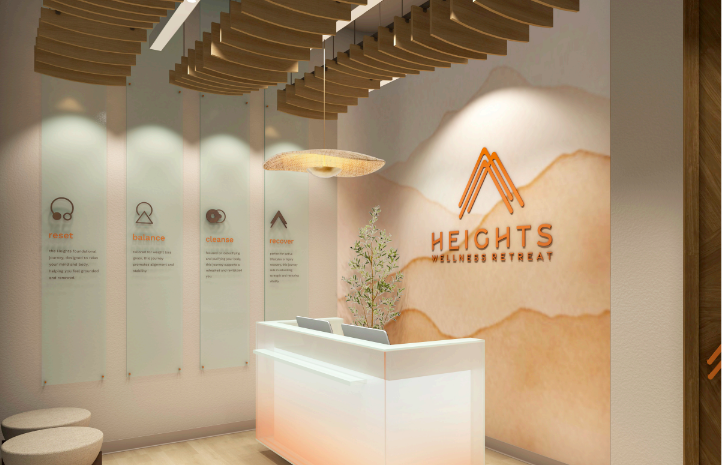
After thirty years in franchise interior design, we’ve watched this scenario play out hundreds of times. An interior designer creates a stunning concept. An architect translates it into construction drawings. An FF&E manufacturer receives a spec sheet and builds what they’re told — or something close to it. By the time the furniture arrives on site, three parties have made three sets of independent decisions, and nobody is entirely certain who owns the outcome when the pieces don’t fit together.
Why the Three-Party Model Fails Franchise Brands
Why do designers, architects, and FF&E manufacturers create problems when working separately?
The traditional franchise buildout process treats interior design, architectural planning, and FF&E manufacturing as sequential, separate disciplines. Each professional hands off their work to the next, assumes it will be interpreted correctly, and moves on to the next project. This looks efficient on paper. In practice, it is one of the most expensive models a franchise system can operate.
The coordination demands are staggering. A single piece of custom millwork requires the designer to specify dimensions, the architect to confirm those dimensions work with structural conditions, and the manufacturer to build to tolerance. According to industry research on FF&E procurement challenges, coordination among clients, vendors, contractors, and manufacturers is one of the most cited sources of failure on commercial buildout projects. A small misalignment — a booth that is two inches too deep, a wall graphic frame that conflicts with a rough-in — can require costly rework that delays opening.
For franchise systems, the stakes multiply with every location. One poorly communicated spec doesn’t just affect a single store. It affects every store built from that same template, until someone catches the error and cycles back through the approval chain to fix it.
Why does brand consistency fail when FF&E design and manufacturing are separated?
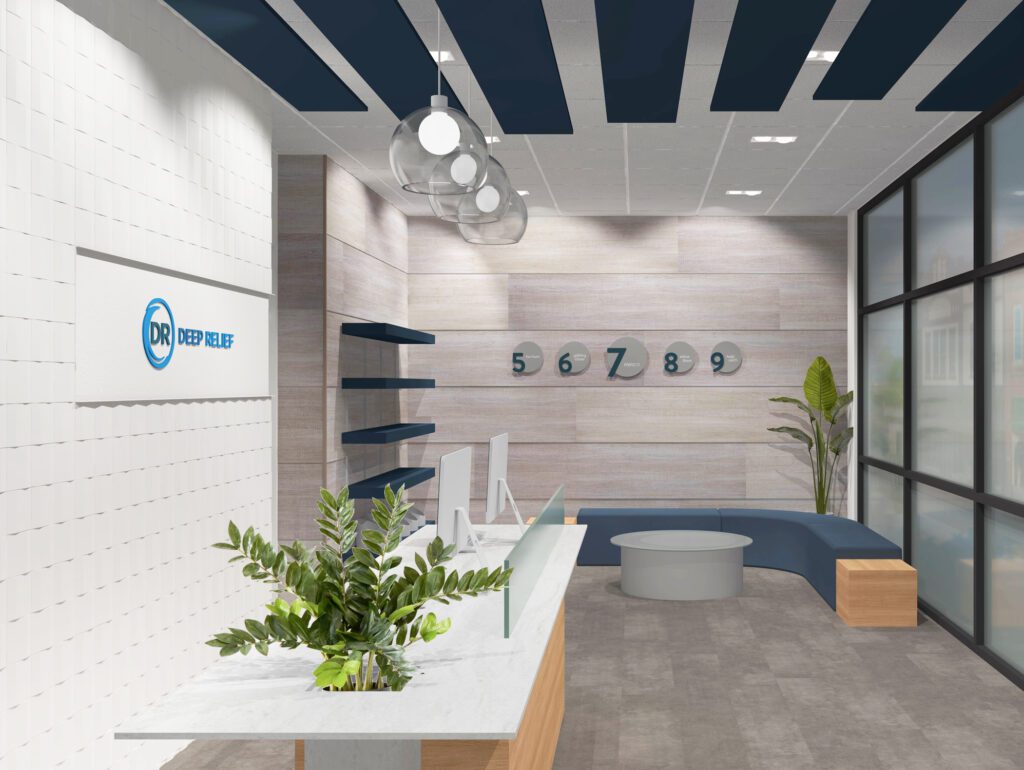
Here’s what the three-party model gets wrong about franchising specifically: brand consistency isn’t a design problem, it’s a manufacturing problem. A designer can create the most precise, detailed specification document imaginable. But if that document passes through an architect’s interpretation and lands at a manufacturer who has never built a piece for your brand before, the result will drift. Materials get substituted. Finishes get approximated. Dimensions get adjusted to what the factory runs most efficiently.
Multiply that drift across twenty, fifty, or two hundred locations and you no longer have a brand. You have variations on a theme. Customers who visit your franchise in Denver and your franchise in Orlando are having different experiences, and the franchisees — who invested significant capital expecting brand-standard interiors — are wondering why their stores look slightly off compared to the photos they’ve seen. The International Franchise Association identifies brand standard compliance as one of the top operational challenges for growing franchise systems, and interior inconsistency is among the most visible failures.
Brand consistency across locations is not achieved by writing better spec documents. It is achieved by having the entity that designed your brand also be the entity that manufactures every piece of it.
What does a disconnected franchise buildout actually cost in time and money?
Construction delays in franchise buildouts are not just inconvenient. They are financially devastating to the individual franchisee. Industry financial advisors consistently recommend adding 15-20% contingency to franchise cost estimates because construction overruns and opening delays are common — and every delay means paying rent, loan payments, and staffing costs without a single dollar of revenue coming in.
When an interior designer, an architect, and an FF&E manufacturer are operating on separate timelines, coordination failures are nearly inevitable. The designer finishes their work and goes home. The architect needs clarifications on FF&E dimensions before finalizing electrical rough-ins. The manufacturer is waiting on final drawings before starting production. Each party waits on the others, and the calendar bleeds weeks and then months. According to Framework Services, construction management failures are the single greatest risk to franchise growth — and the most common failure mode is leaving franchisees to coordinate this process themselves.
What Integrated Franchise Design Actually Solves
How does integrated franchise design work in practice?
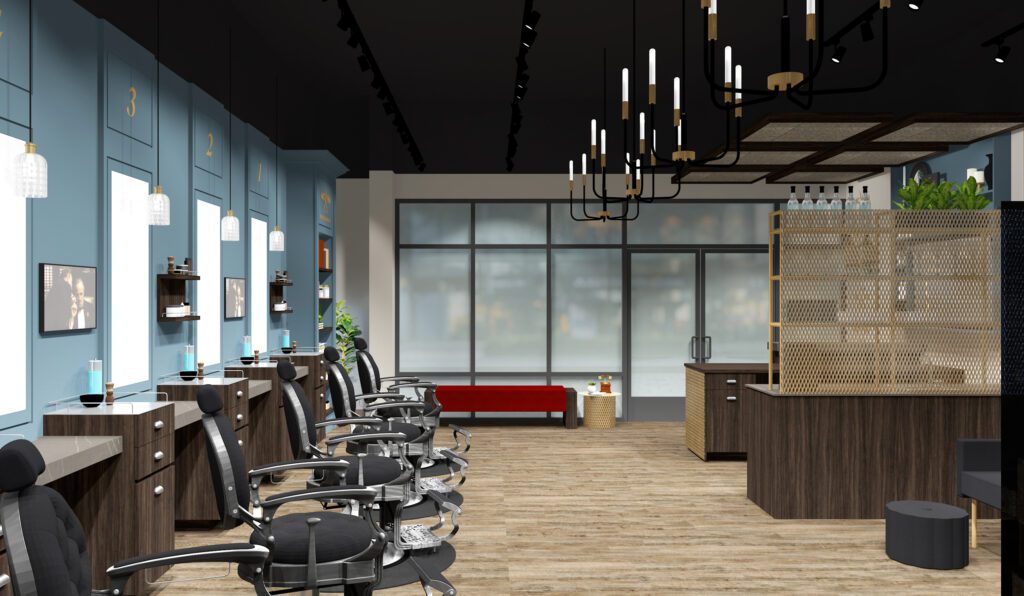
Integrated franchise design is a specific operational model in which a single firm is responsible for the interior design concept, the FF&E specifications, and the manufacturing of those furnishings and fixtures. That firm passes a complete master template to the local architect — whose job becomes MEPs, stamping drawings and pulling permits, not interpreting creative intent.
The difference in outcomes is not subtle. When the firm designing your franchise interior is also manufacturing your furnishing packages, there is no gap between what was designed and what gets built. The same people who drafted the dimensions are running the production line. The tolerances are held because the people who set them are accountable for meeting them.
This is the model Wadsworth Design has operated on for three decades. We design the interior. We design and manufacture the furnishings, fixtures, and millwork. We ship a complete package with installation instructions detailed enough that contractors install twice as fast as conventional FF&E deliveries because every piece arrives labeled, sequenced, and documented. The local architect completes construction drawings and submits for permits. Their role is well-defined, appropriately scoped, and never confused with ours.
What is a franchise master brand standard template and why does it matter?
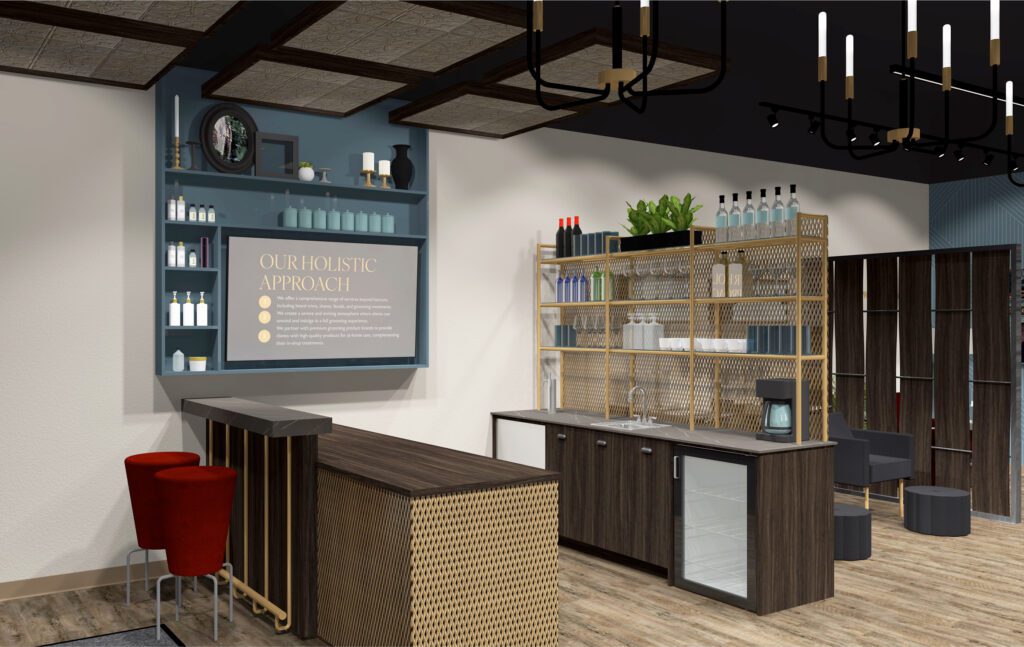
A franchise master brand standard template is a fully engineered, spatially modeled, dimensionally precise design blueprint for every element of a store interior — adaptable to different square footages and configurations, but engineered to produce the same brand experience regardless of location. It is the single source of truth that eliminates interpretation gaps between designer, architect, and manufacturer.
When a franchisee signs their agreement, they receive access to a brand standard master template that has already resolved every coordination question. Electrical rough-in locations are already coordinated with FF&E placement. Plumbing and structural elements are already accounted for in the millwork dimensions. The local architect takes this template, applies it to the specific lease space, and produces the permitted drawing set. Nothing gets lost in translation because there’s no translation happening.
This is how scalable franchise rollouts actually work in practice. Not by hoping that separate professionals interpret your brand correctly location after location, but by engineering brand consistency into a system that replicates cleanly.
Why is franchise FF&E pricing unpredictable under the traditional model — and how does integration fix it?
One of the persistent frustrations franchisors and franchisees share about traditional buildouts is pricing unpredictability. A franchisee in Phoenix gets quotes on FF&E that are 30% higher than what a franchisee in Atlanta paid the year before. Lead times vary wildly. Products get discontinued between the first and fifth location. Every new buildout feels like the first buildout all over again.
Integrated franchise design solves this through American manufacturing and product ownership. When your FF&E manufacturer designs and produces your furnishing package in-house, they control the supply chain. Products don’t go out of stock. They don’t get discontinued mid-rollout. Pricing is consistent because the cost inputs — materials, labor, tooling — don’t change between your second location and your twentieth. The franchisee buying today is working from the same price sheet as the franchisee who opened three years ago, not trying to find a substitute for a piece that’s no longer available.
How to Evaluate a Franchise Design Partner
What questions should franchisors ask when evaluating an integrated franchise design firm?
If you’re evaluating design partners for your franchise system, the distinction to press on is accountability. Ask each firm: if there is a dimensional conflict between your design documents and the FF&E specifications, who owns that problem? In the three-party model, the honest answer is usually “we’ll figure it out when it comes up” — which means the franchisee figures it out, on their dime, during buildout.
Ask whether the firm manufactures its own furnishing packages or sources from third-party vendors. Ask what happens when a product is discontinued three years into your rollout. Ask how pricing is held consistent as you scale from five locations to fifty. Ask to see installation documentation and get references from contractors who have installed their packages before.
The answers to these questions will reveal quickly whether a firm is truly integrated or whether “full service” means they manage relationships with a lot of different vendors on your behalf. Those are not the same thing.
Why is the franchisee buildout experience a brand asset — not just an operations detail?
The stress level of your franchisee during buildout is a brand problem, not just an operations problem. A franchisee who spent six months managing conflicts between a designer, an architect, and an FF&E vendor — resolving disputes, chasing lead times, handling substitutions — is a franchisee who starts their business relationship with the brand in a state of exhaustion and frustration.
Contrast that with a franchisee who received a master template, connected with a local architect, received a complete FF&E shipment with labeled components and detailed instructions, and opened on time. That franchisee becomes a recruiting asset. They tell the next prospective franchisee: the buildout process actually worked the way they said it would.
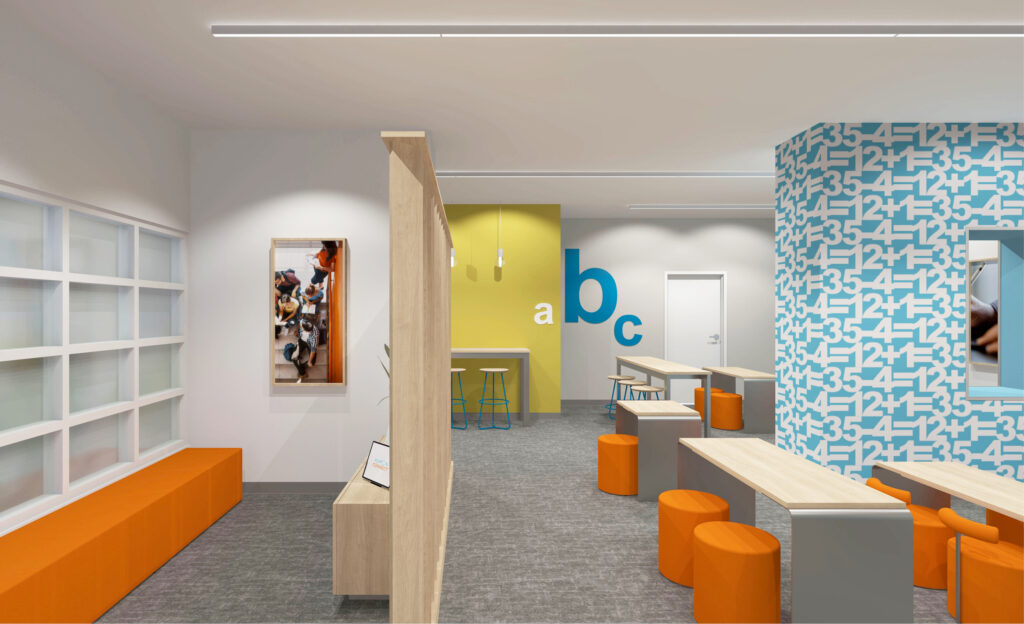
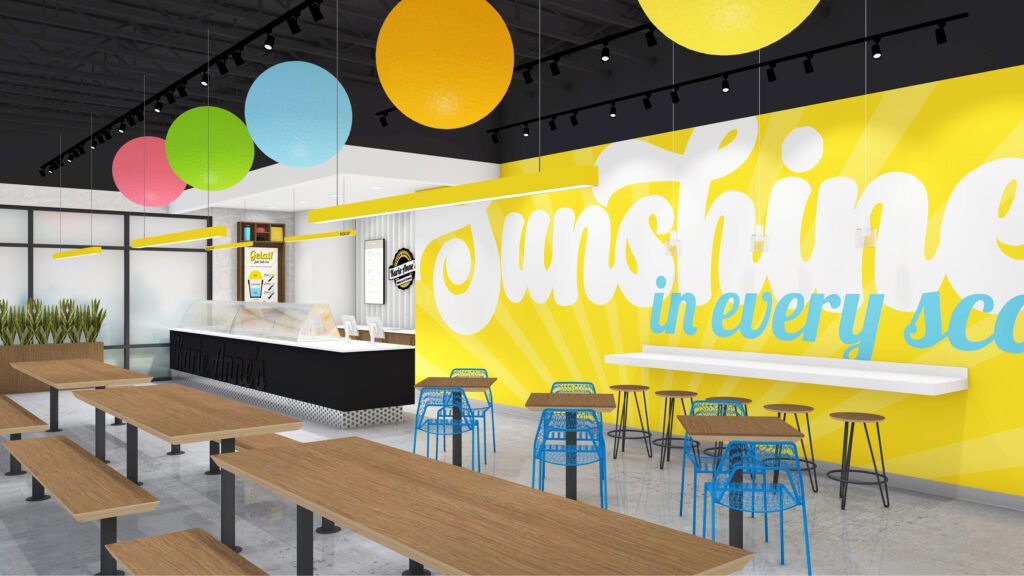
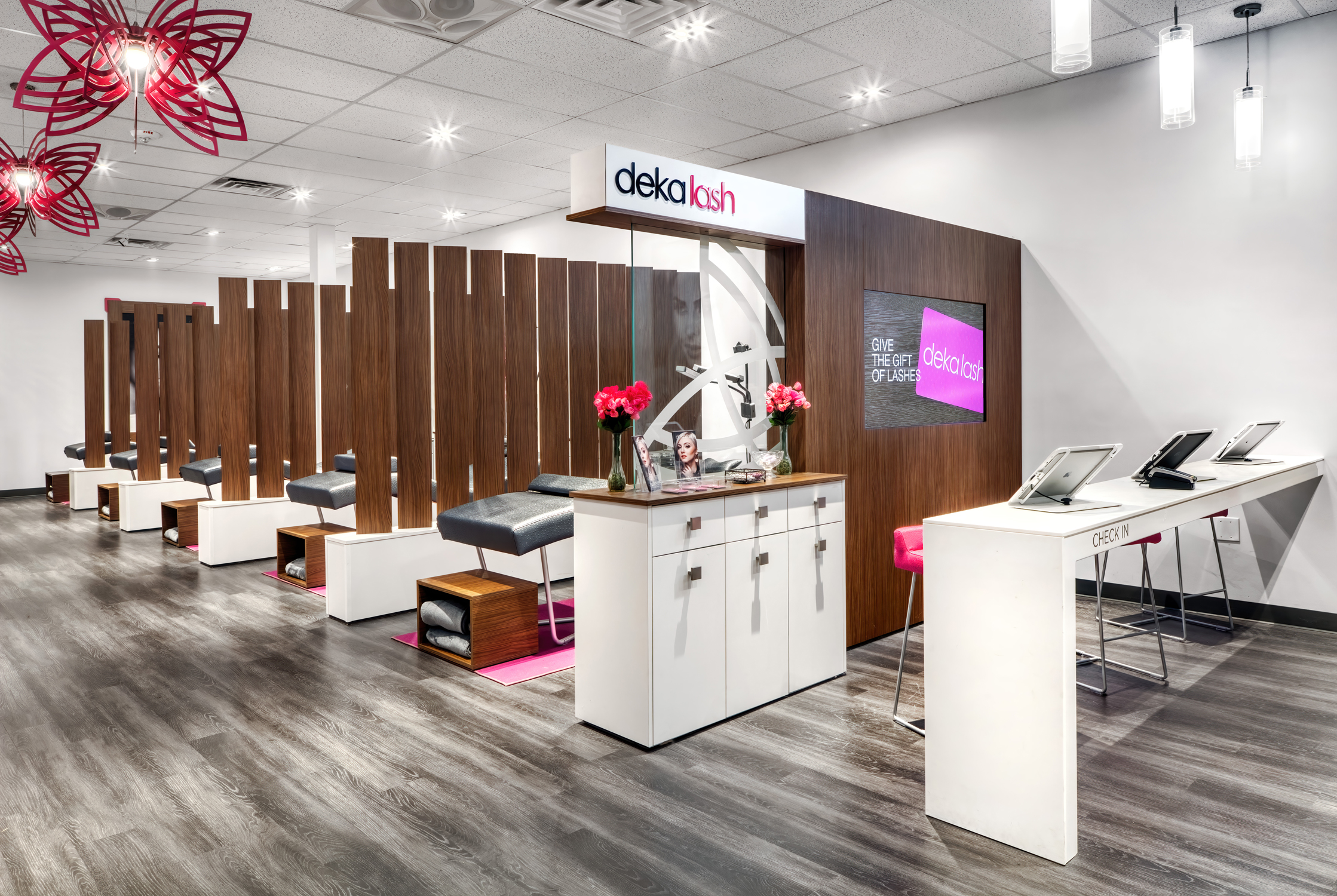
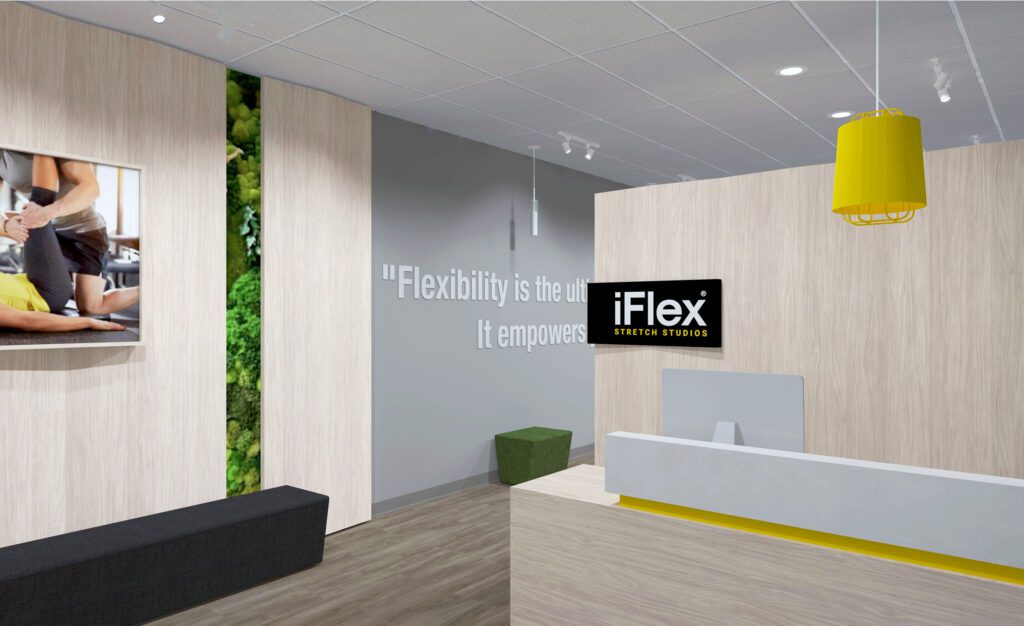
The simplification of the buildout experience isn’t just good for franchisees. It is one of the most powerful growth tools a franchisor can offer. View completed Wadsworth Design franchise projects to see what that experience produces across a range of business types and brand identities.
The Measurable Outcomes of Getting This Right
How much does integrated franchise design improve brand consistency and buildout speed?
When design and manufacturing are unified, brand consistency shifts from aspiration to engineering. Every custom reception desk, every retail display, every graphic element is produced from the same drawings that produced the first location. Tolerances are held. Colors match. Materials are identical. The customer in location twelve has the same experience as the customer in location one. Research from Princeton and Georgia Tech found that content and business practices incorporating authoritative, consistent signals achieve 30-40% higher trust and recognition rates — and for franchise brands, consistent interiors are among the most immediate signals consumers register.
Shorter timelines are among the most direct financial benefits. When the FF&E package ships on time, complete, labeled, and sequenced, installation moves faster. When the local architect is working from a master template rather than interpreting a design concept, the drawing and permitting process moves faster. When there are no coordination gaps between designer, architect, and manufacturer, the questions that typically idle a project for weeks simply don’t arise. Getting a franchisee open four to six weeks earlier than the traditional model represents a significant acceleration of revenue generation. Our shipping and installation process is specifically engineered for this outcome.
What does integrated franchise design mean for franchisees with no construction experience?
Most franchisees are not construction professionals. They are entrepreneurs who chose franchising specifically because the model promised a proven system. The buildout process, as commonly experienced, violates that promise. It requires franchisees to make complex decisions about design, construction, and procurement for which they have little preparation.
Integrated franchise design restores the promise. The franchisee doesn’t need to manage three vendors and arbitrate disputes between them. They work within a system that has already resolved those questions. They can focus on hiring, training, and preparing to run their business — which is exactly why they chose to open a franchise in the first place.
Putting It All Together
At Wadsworth Design, we built our entire model around eliminating the disconnect that makes traditional franchise buildouts expensive, slow, and inconsistent. Our integrated store interior design process and in-house FF&E manufacturing mean the same firm that designs your brand builds every piece of it. Our master furnishing design templates give local architects exactly what they need to produce permitted drawings without interpreting your design intent. Our complete rollout systems deliver consistent pricing, consistent availability, and consistent results from your second location to your hundredth. Explore the brands we’ve built or connect with our team to talk through what this approach could mean for your franchise system.
Frequently Asked Questions About Integrated Franchise Design
What is the difference between integrated franchise design and hiring separate designers, architects, and FF&E vendors? In integrated franchise design, a single firm handles interior design, FF&E specification, and furnishing manufacturing. In the traditional model, these are three separate parties who hand off work sequentially. Integration eliminates the coordination failures — dimensional conflicts, product substitutions, timeline delays — that occur at every handoff in the three-party model.
How does integrated franchise design improve brand consistency across multiple locations? When the firm that designed your brand also manufactures every furnishing and fixture, the design intent is never interpreted by a third party. Materials, dimensions, finishes, and tolerances are controlled from a single source. Every location receives identical components built from identical drawings — not approximations of a spec document.
Why do franchise buildout timelines get delayed, and how does integration fix it? Delays typically occur when designers, architects, and FF&E manufacturers are waiting on each other for information before proceeding. An architect can’t finalize electrical rough-ins until FF&E dimensions are confirmed. A manufacturer can’t start production until final drawings are approved. Integrated design resolves all of these dependencies internally before the local architect receives the master template, removing the waiting from the franchisee’s timeline.
How does integrated franchise design create more predictable FF&E pricing? Traditional FF&E procurement exposes franchisees to market pricing, vendor availability, and product discontinuation risk. When an integrated firm manufactures franchise furnishing packages in-house, it controls materials, labor, and tooling costs. Pricing stays consistent from the second location to the fiftieth because the production inputs don’t change between builds.
What should a franchisor look for in an integrated franchise design partner? Look for a firm that designs and manufactures its own FF&E packages — not one that sources from third-party vendors. Ask whether their products might be discontinued mid-rollout. Ask for installation documentation and contractor references. Ask who owns the problem when a dimensional conflict arises between design and construction documents. A truly integrated partner has clear, single-party answers to all of these questions.