
TL;DR
The case for American-made franchise FF&E has moved from values-based to financially urgent in 2025 and 2026. Three forces have converged: tariffs of 25% or more on imported furniture categories including upholstered seating and cabinetry; structural lead time risk that routinely adds three to six months to overseas FF&E delivery and can derail franchise buildout schedules; and brand consistency erosion that compounds across locations when overseas manufacturers interpret, rather than replicate, your design specifications.
Domestic FF&E manufacturing addresses all three simultaneously. Tariff-free pricing means franchisee buildout budgets are accurate and stable. Domestic lead times measured in weeks rather than months mean franchisees open on schedule. In-house production accountability means every piece built for location thirty matches every piece built for location two, because the same firm that designed it manufactured it.
For franchisors managing growth in the current environment, the sourcing decision isn’t just a procurement call. It’s a decision about how predictable you want your franchisee economics to be, how defensible you want your FDD cost estimates to be, and how consistent you want your brand to look in the field. American-made franchise FF&E is the answer to all three.
For most of the last two decades, sourcing FF&E overseas was a tempting cost decision. Imported furniture was cheaper initially, and the trade-off — longer lead times, poorer quality, harder-to-match specifications — seemed almost worth the risk. Though that risk may have been tempting, that calculation has proven false. American-made franchise FF&E has shifted from a patriotic preference to a genuine operational and financial advantage, and franchisors who don’t recognize the change are quietly building risk into every new location they open.
Quick Answer: What is American-made franchise FF&E and why does it matter now? American-made franchise FF&E refers to furnishings, fixtures, and equipment designed and manufactured domestically for franchise interiors. It matters because imported FF&E now carries tariffs of 25% or more on key furniture categories, in addition to unpredictable lead times of three to six months, and quality control gaps that compound across multi-location rollouts. Domestic manufacturing eliminates all three risks simultaneously.
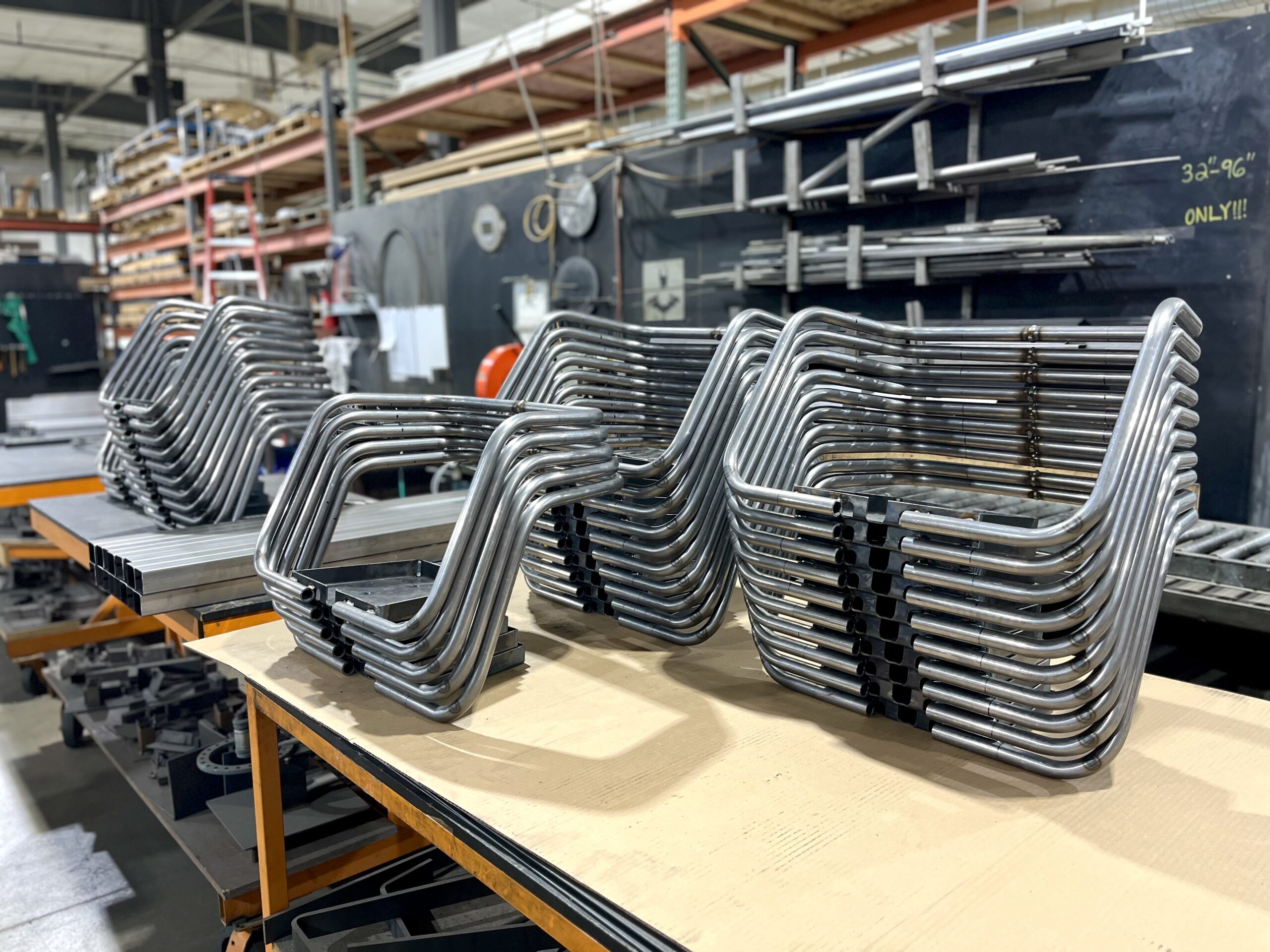
Three separate forces have converged recently to make this shift decisive: a new tariff landscape that has added real cost to imported furniture categories, a supply chain that still carries structural fragility from the disruptions of the early 2020s, and a franchise growth environment where predictable buildout costs are no longer optional. After thirty years of designing and manufacturing franchise interiors, we’ve watched this transition happen in real time. The franchisors adapting fastest are the ones who treat their FF&E sourcing strategy as a brand and operations decision, not just a procurement line item.
Why the Imported FF&E Calculation Has Changed for Franchises
How do tariffs affect franchise FF&E and buildout costs?
The numbers are no longer hypothetical. As of October 2025, a 25% global tariff applies to upholstered furniture, kitchen cabinets, and vanities, with scheduled increases that have been delayed but remain on the horizon. For franchises that source custom seating, millwork, and built-in cabinetry from overseas manufacturers — which describes many mid-market franchise buildout packages — that tariff applies directly to landed cost.
Steel and aluminum tariffs have been raised to 50% under Section 232 as of June 2025, a meaningful cost input for any franchise whose FF&E package includes metal frames, shelving, or fixture components. The compounding effect across a full furnishing package is significant. Industry experts tracking FF&E procurement in 2026 estimate that tariff uncertainty can shift landed costs by 10-25% on categories with heavy import exposure — and that shift happens without warning when trade policy changes.
For franchisors, the practical consequence lands squarely in the Franchise Disclosure Document. VettedBiz’s 2026 franchise investment analysis notes that FDD Item 7 cost estimates may now understate actual buildout costs if those figures were prepared before the latest tariff rounds. Franchisees signing agreements today and discovering mid-buildout that their FF&E budget is 15-25% short are not having an accounting problem. They’re experiencing the direct consequence of a sourcing strategy that was designed for a different trade environment.
Why do imported FF&E lead times create franchise buildout risk?
Tariff cost is visible and calculable. Lead time risk is harder to budget for and, in practice, more damaging to individual franchisees. Imported furniture routinely takes three to six months to arrive, and that timeline extends further when global supply chains are under stress — port congestion, shipping container shortages, customs delays, and factory backlogs can all add weeks without warning. For a franchise buildout with a fixed lease commencement date, an eight-week FF&E delay isn’t an inconvenience. It’s two months of rent, loan payments, and pre-hired staff costs with no revenue to offset them.
Domestic manufacturers produce and ship within weeks rather than months, a difference that compresses franchise buildout timelines in ways that directly affect franchisee economics. When a franchisee’s FF&E package arrives complete and on schedule, the rest of the buildout sequence — installation, punch list, inspection, opening — can proceed without disruption. When it doesn’t, every other trade waits, too. The domino effect of a delayed FF&E shipment on a commercial buildout is one of the most predictable and preventable sources of franchisee financial stress, and it is almost entirely a sourcing decision.
How does imported FF&E undermine franchise brand consistency at scale?
There is a third risk in overseas FF&E sourcing that franchisors rarely quantify until they’re forty locations into a rollout and suddenly notice that the brand experience is drifting. Imported manufacturers, particularly those producing custom franchise millwork and built-ins, work from specification documents interpreted across language and production-system differences. Dimensions get rounded. Finishes get approximated. Substitute materials get introduced without explicit disclosure when original materials aren’t available.
For franchise brands, consistent interiors are among the most immediate signals consumers register when evaluating brand quality. The customer who visits location three and then location thirty-seven is making subconscious comparisons. When the booths don’t match, when the millwork finish has shifted two shades, when a fixture that should be identical has different proportions — the brand erodes in ways that no marketing spend recovers. Our franchise furnishing design process is specifically built to prevent this kind of drift, because we manufacture every piece ourselves from the same drawings we designed.
What Domestic FF&E Manufacturing Actually Delivers
What are the real advantages of American-made FF&E for franchise buildouts?
Domestic FF&E manufacturing for franchise systems delivers three concrete advantages that imported sourcing structurally cannot match: tariff-free pricing stability, predictable lead times, and manufacturing accountability.
Tariff-free stability means that when you work with an American FF&E manufacturer for your franchise furnishing packages, the price your second franchisee pays is the same price your twentieth franchisee pays. There are no import duties to absorb. There are no currency fluctuations built into the quote. There are no midstream cost adjustments when trade policy shifts. American-made furniture is not subject to import tariffs, providing a predictable price and long-term value that imported goods cannot guarantee. For a franchisor managing a rollout across dozens of locations over several years, this predictability is not a convenience. It’s a financial foundation.
Lead time predictability means that every franchisee who orders a furnishing package gets an accurate timeline they can count on for their buildout schedule. Domestic production removes the variables — shipping container availability, port congestion, customs processing — that make imported FF&E timelines unreliable. Our complete shipping and installation packages are designed to arrive on a predictable schedule with every component labeled and sequenced, so installation moves in days rather than weeks.
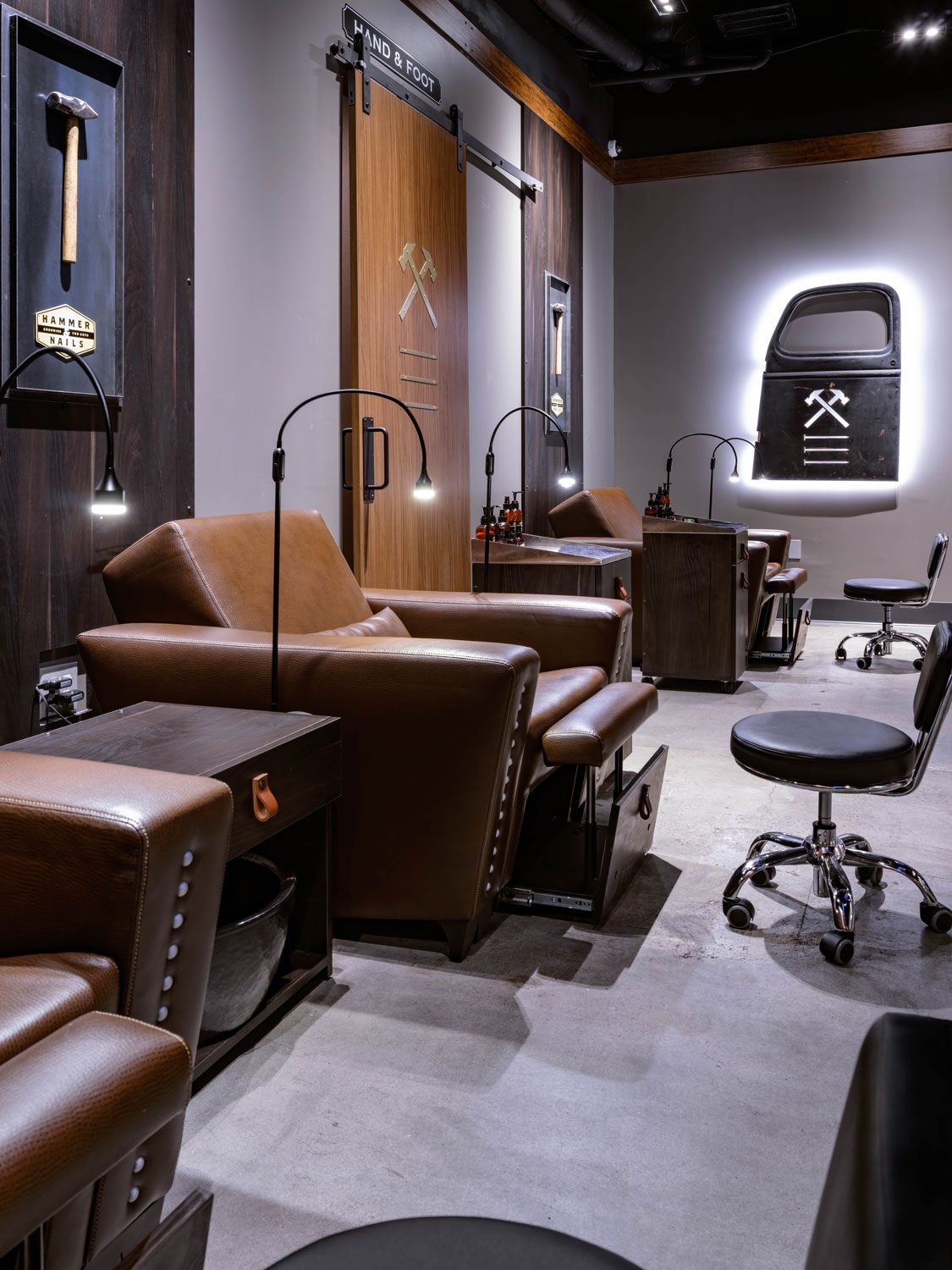
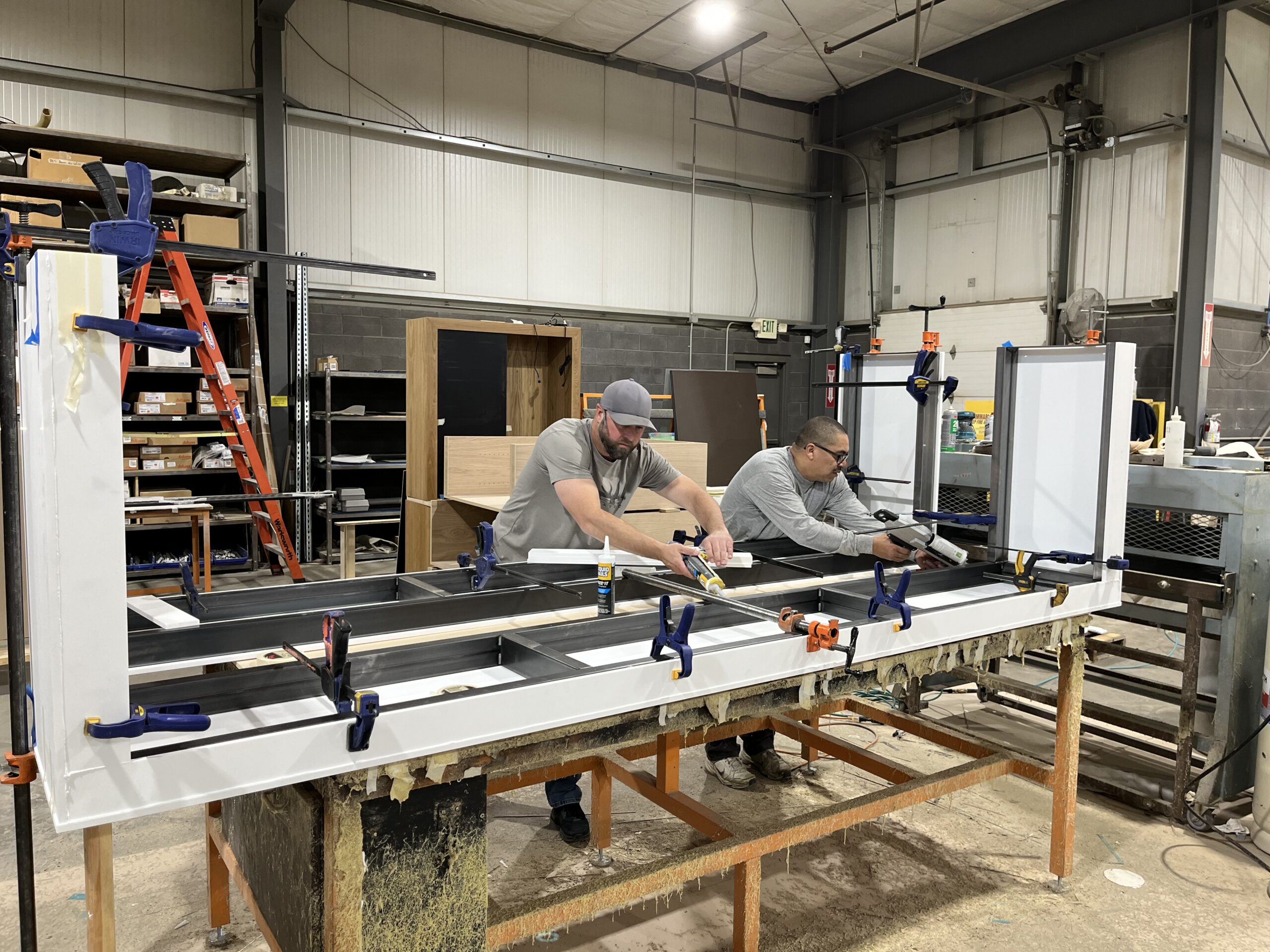
Manufacturing accountability means that when a dimensional conflict arises — a piece that doesn’t fit as specified, a finish that isn’t matching the approved sample — the resolution is a phone call to the team that built it, not a dispute routed through an international supply chain. The people who made it fix it. This is not a small operational detail. It is the difference between a two-day resolution and a six-week delay.
How should franchisors evaluate a domestic FF&E manufacturing partner?
The first question to ask any prospective FF&E partner is simple: do you manufacture in the United States, or do you source from domestic distributors who import from overseas? These are not the same thing. A domestic distributor who stocks imported furniture is still exposed to tariff pricing, still subject to international lead times for reorders, and still unable to guarantee that your brand’s specific pieces will be available and identically produced three years into your rollout.
A genuine domestic manufacturer owns the production process. Ask where the furniture is built. Ask whether the production team that makes your pieces is the same team that can resolve a quality issue or a dimensional conflict. Ask what happens when a material gets discontinued — can they reformulate it in-house, or do they go back to the same overseas supply chain?
The second question is whether the FF&E partner also handles franchise interior design. A manufacturer who builds to a third party’s specifications has one level of accountability. A firm that designed your interior and then manufactured every piece of it has complete accountability. There are no specification handoffs. There are no interpretation gaps. The same people who set the dimensions are running the production line, and that continuity is what produces identical results across your tenth location and your fiftieth.
What This Means for Franchise Growth in the Current Environment
How does American-made FF&E affect franchise scalability and franchisee confidence?
Regulators are now pushing franchisors toward more accurate, frequently updated Item 7 buildout cost estimates in FDDs — and the franchisors best positioned to provide those accurate estimates are the ones whose FF&E pricing isn’t subject to tariff volatility. When your furnishing package price is set by a domestic manufacturer who controls their own cost inputs, you can put a number in your FDD and stand behind it. When your pricing is set by an overseas supplier navigating tariff uncertainty, you’re estimating. The difference between those two positions shows up in franchisee trust and franchise sales conversion.
For franchisees, domestic sourcing translates to a buildout experience that matches what they were promised. The package arrives on time. The prices don’t change between agreement signing and purchase order. The pieces fit because the firm that designed them also built them. That experience turns franchisees into referral sources. It is, in practice, one of the most undervalued growth tools in a franchisor’s toolkit, and it costs nothing beyond choosing the right manufacturing partner from the start.
What does consistent FF&E pricing mean for franchise growth projections?
The economics of franchise growth depend heavily on predictable unit economics at the location level. When scalable rollout systems are built on domestic manufacturing, the cost model doesn’t degrade as you add locations. The franchisee opening location twenty pays the same FF&E price as the franchisee who opened location two, because the inputs haven’t changed. There are no supply chain surprise costs baked into the per-unit pro forma. Growth projections made today hold when the fifteenth location opens next year.
Compare that to a rollout built on imported FF&E during a period of active trade policy change. Every new location is a new sourcing event. Pricing needs to be re-quoted. Lead times need to be re-confirmed. Substitutions need to be evaluated. The cumulative cost of that administrative overhead across a multi-location rollout, before you even get to the tariff impact, is significant.
Frequently Asked Questions About American-Made Franchise FF&E
What is American-made franchise FF&E and why does it matter in 2026? American-made franchise FF&E is furnishings, fixtures, and equipment designed and manufactured domestically for franchise interiors. In 2026 it matters because imported furniture now carries tariffs of 25% or more on key categories, including upholstered seating and cabinetry, making domestic production the most cost-stable and schedule-reliable sourcing option for franchise buildouts.
How do tariffs on imported furniture affect franchise buildout budgets? Tariffs of 25-50% on imported furniture categories directly increase the landed cost of any FF&E package sourced overseas. Industry tracking puts the total landed-cost impact at 10-25% on heavily imported categories. FDD Item 7 estimates prepared before recent tariff rounds may now understate actual buildout costs, creating a gap between what franchisees were told to expect and what they actually pay.
Why do domestic FF&E lead times matter for franchise buildout timelines? Imported furniture typically takes three to six months to arrive, and that timeline can extend further with port congestion or shipping disruptions. Every week a buildout waits on FF&E is a week of rent, loan payments, and staffing costs with no revenue. Domestic manufacturers ship in weeks, not months, allowing franchisees to open on schedule and begin generating revenue without absorbing preventable pre-opening delay costs.
How does American-made FF&E protect brand consistency across franchise locations? Domestic manufacturers producing custom franchise pieces from their own drawings control tolerances, materials, and finishes directly. There is no interpretation gap between the design specification and the manufactured piece. Every location receives components built to the same standard from the same production process — not approximations produced by overseas factories working from translated spec documents.
What should a franchisor look for when choosing a domestic franchise FF&E manufacturer? Look for a firm that manufactures in the United States, not one that distributes imported goods domestically. Ask whether they design the franchise interior as well as produce the furnishings — a firm accountable for both has no handoff gaps. Ask about pricing consistency across multi-year rollouts, lead time guarantees, and their process for resolving quality issues. A genuine domestic manufacturer can answer all of these with specifics.
At Wadsworth Design, we’ve spent thirty years designing and manufacturing franchise interiors entirely in the United States, and the advantage that gives our clients has never been more concrete than it is right now. Our American manufacturing capabilities mean tariff-free pricing that holds from your second location to your fiftieth. Our integrated store interior design process means we design what we build, eliminating the specification gaps that erode brand consistency over time. From master furnishing design templates through complete rollout systems, we provide the infrastructure for franchise growth that doesn’t get disrupted when trade policy changes. Explore the franchise brands we’ve built or connect with our team to talk through what domestic manufacturing could mean for your franchise system.